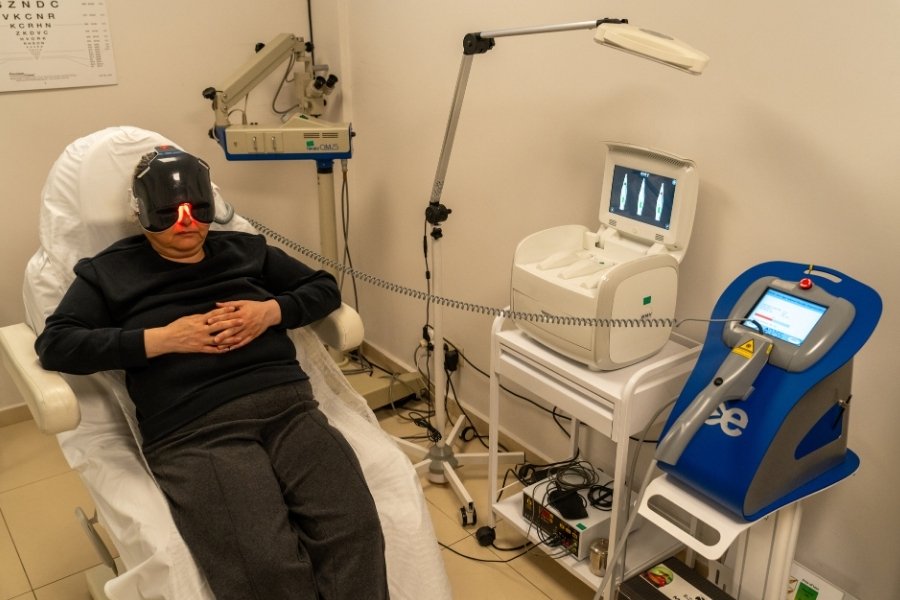
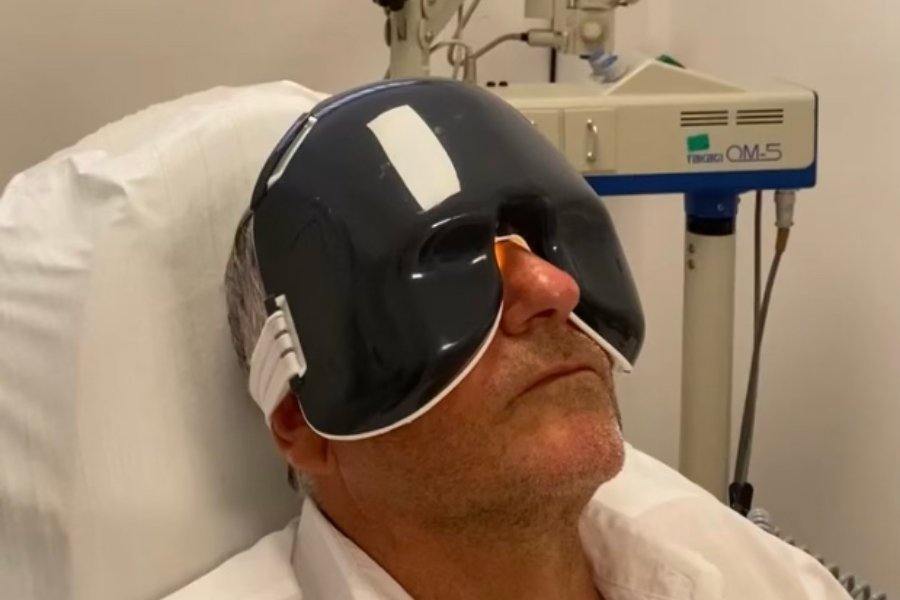
LIGHT THERAPY FOR MACULAR DEGENERATION
Photobiomodulation (PBM), also known as Low-Level Light Therapy (LLLT), uses red or near-infrared light to enhance cellular energy production.
The wavelengths of light used typically range from 600 to 1000 nm.
Goal: To support energy production in retinal cells, particularly in the macula.
PBM focuses on improving mitochondrial function.
Theoretical Effects of PBM Therapy
• May increase cellular energy production (ATP production).
• May reduce oxidative stress.
• May suppress inflammation.
• May slow cellular damage.
These effects may be particularly beneficial in patients with early to intermediate age-related macular degeneration (AMD).
Current Evidence
Research on PBM is still limited but promising:
• Some studies have reported modest improvements in visual acuity.
• Structural improvements in the retina have been observed in certain studies.
• However, the results are not consistent across all patients.
PBM is being investigated primarily for dry age-related macular degeneration. It does not replace the standard treatment for wet age-related macular degeneration, which consists of intravitreal injections.
Advantages
• Painless and non-invasive.
• Low risk of side effects.
• Easy to administer in a clinical setting.
Who May Benefit?
• Patients with early or intermediate dry AMD.
• Individuals experiencing gradual vision loss.
• Patients seeking supportive therapy in addition to standard treatment.
However, the decision to use PBM therapy should always be made by an ophthalmologist. In patients with dry age-related macular degeneration, oral vitamin supplements should not be neglected as supportive treatment. In patients with wet (exudative) age-related macular degeneration, it is extremely important to continue intravitreal (eye) injection therapy according to the treatment schedule recommended by their ophthalmologist without interruption.